ALIGNED WITH THE VICTORIAN CURRICULUM
Year 9 Maths Tutoring
Our Year 9 Maths program is aligned with the Victorian Curriculum and covers all core topics taught in schools. Lessons focus on strengthening algebraic thinking, interpreting graphs, and applying concepts accurately, with structured practice to build confidence, consistency, and problem-solving skills over time.
Year 9 Mathematics Curriculum Coverage
Our Year 9 Mathematics program is aligned with the Victorian Curriculum as published by the Victorian Curriculum and Assessment Authority (VCAA). The content below outlines the key learning areas, concepts, and curriculum codes covered through our tutoring program. Instruction is structured to support school learning while further developing algebraic reasoning, problem-solving skills, and mathematical thinking required at this level.
Numbers (VC2M9N)
1. Rational and irrational numbers including surds and π (VC2M9N01)
2. Laws of indices (positive and zero indices) (VC2M9N02)
3. Scientific notation and very large/small numbers (VC2M9N03)
4. Operations with rational numbers, including exact values and estimation (VC2M9N04)
5. Percentages, percentage increase and decrease, and error (VC2M9N05)
6. Financial and mathematical modelling using rational numbers (VC2M9N06)


Algebra (VC2M9A)
1. Algebraic expressions: simplify, expand, factorise and manipulate expressions (VC2M9A01)
2. Solving linear equations and inequalities, including graphical representations (VC2M9A02)
3. Linear relationships and graphs in the form y = mx + c (VC2M9A03)
4. Simultaneous linear equations (introductory methods) (VC2M9A04)
5. Patterns, linear rules, and algebraic reasoning, including use of digital tools (VC2M9A05)
Measurement (VC2M9M)
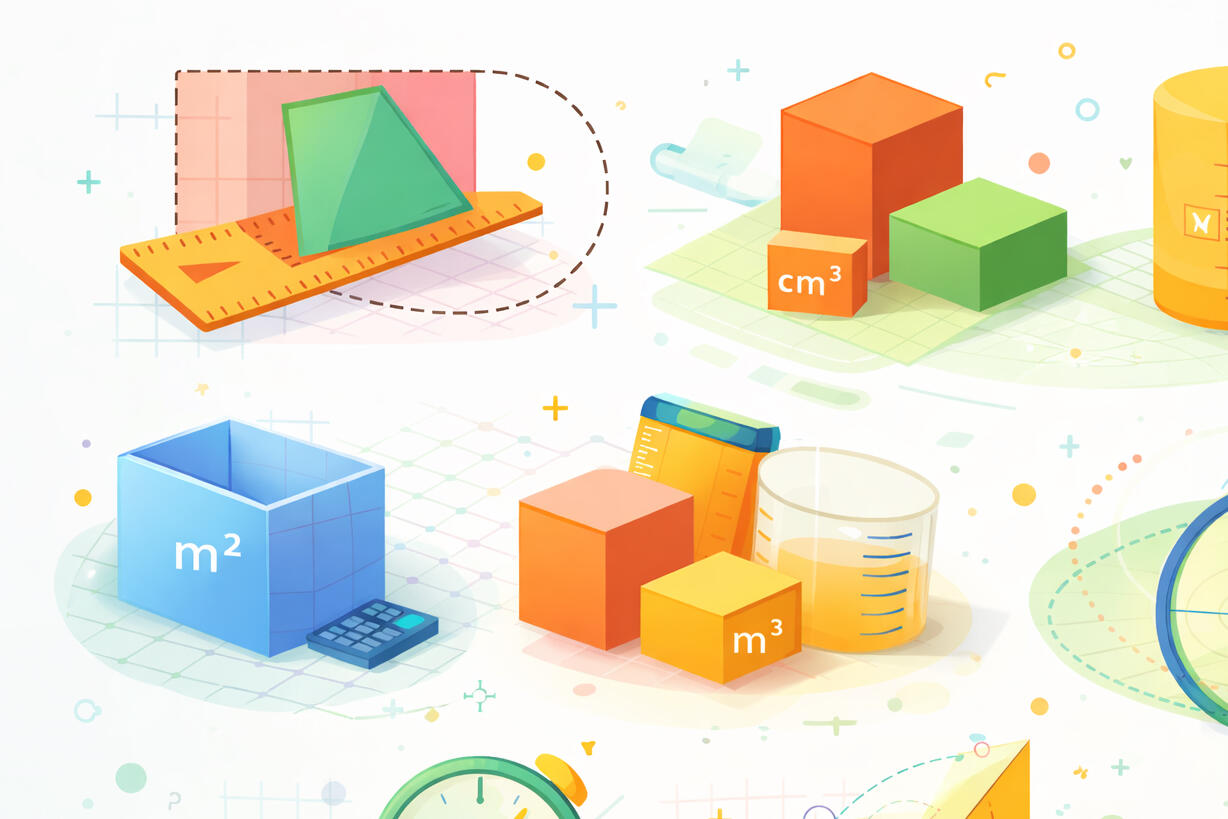
1. Area and perimeter of composite shapes, including problem-solving applications (VC2M9M01)
2. Surface area and volume of prisms and cylinders (VC2M9M02)
3. Circumference and area of circles, including exact values using π (VC2M9M03)
4. Distance and midpoint on the Cartesian plane (VC2M9M04)
5. Rates and unit rates, including real-world comparisons (VC2M9M05)
6. Pythagoras’ theorem, including applications and problem solving (VC2M9M06)
7. Ratio, rate, and scale modelling in distance–time and financial contexts (VC2M9M07)

Space (VC2M9SP)
1. Congruence and similarity of shapes, including scale factors (VC2M9SP01)
2. Properties of triangles and quadrilaterals, including geometric reasoning (VC2M9SP02)
3. Coordinate geometry, including distance and midpoint on the Cartesian plane (VC2M9SP03)
4. Geometric constructions and reasoning, including congruence and similarity tests (VC2M9SP04)
Statistics (VC2M9ST)
1. Populations, samples, and data collection methods, including survey design (VC2M9ST01)
2. Data displays and distributions, including histograms and box plots (VC2M9ST02)
3. Measures of centre and spread, including mean, median, range, and interquartile range (VC2M9ST03)
4. Statistical investigations, interpretation of results, and ethical considerations (VC2M9ST04)


Probability (VC2M9P)
1. Theoretical and experimental probability, including complementary events (VC2M9P01)
2. Two-way tables, tree diagrams, and Venn diagrams for representing outcomes (VC2M9P02)
3. Compound events, including simulations and comparison of results (VC2M9P03)
PROGRAM DELIVERY
How Year 9 Maths Is Taught
Our Year 9 Mathematics program is delivered through structured weekly lessons with a strong focus on retrieval practice. Students are regularly encouraged to recall and apply previously learned concepts, strengthening long-term understanding, improving accuracy, and building confidence across algebra, graphs, and problem-solving topics rather than relying on short-term memorisation.
24/7 doubt support
Students can ask questions outside lesson hours and receive guidance to clarify concepts, resolve mistakes, and stay on track with their learning.
Weekly lessons and practice material
Each topic is supported with structured lessons, curated practice worksheets, and progressively challenging questions to reinforce understanding.
Exam-style and application-based problems
Students practise applying concepts through exam-style and real-world problems, helping them develop accuracy, problem-solving skills, and exam readiness.
Weekly progress reports
Regular progress updates highlight strengths, areas needing improvement, and recommended focus areas, allowing for targeted and consistent improvement.
Thank you
Thank you for taking the time to explore our Year 9 Mathematics program. If you’d like to know more about lesson structure, scheduling, or enrolment, feel free to get in touch, we’re happy to help.